
Turn over a favorite ring or look beside the clasp of a necklace and you might notice a tiny engraving: 925, 14K, or a symbol you do not recognize. Those small marks can tell you something important about the metal, but only if you know what they mean—and what they do not mean.
925 generally identifies sterling silver: 92.5% silver in the metal alloy. 14K identifies 14-karat gold: 14 parts gold out of 24, or about 58.3% pure gold. Neither stamp tells you the size or identity of a gemstone, and a mark by itself is not proof that a piece is authentic.
Jewelry stamp meanings at a glance
| Mark | Usual meaning | What to check |
|---|---|---|
| 925 / .925 / STER | Sterling silver, 92.5% silver | Any separate plating or finish |
| 14K / 14KT | 14-karat gold alloy, about 58.3% gold | Any extra letters that qualify the mark |
| 585 | 585 parts gold per thousand; commonly associated with 14K | Full set of marks and seller description |
| 18K / 750 | 18-karat gold: 75% gold | Whether the claim is for the whole alloy or a coating |
| GP / GF / RGP | Qualifiers for a gold layer or gold-filled construction | Exact wording, underlying metal and construction |
Marking conventions vary by market, maker and product. Read every character instead of interpreting a single number in isolation.
What does 925 mean on jewelry?
925 means the alloy contains 925 parts pure silver out of 1,000—the familiar 92.5% silver used for sterling silver. The remaining 7.5% consists of other metals added to make the alloy more useful for jewelry than very soft fine silver alone.
Sterling silver is a precious metal, and it is a beautiful foundation for everything from petite pendants to ornate statement earrings. A 925 stamp refers to the base metal's composition, not to a gemstone's quality and not to the retail value of the finished piece.
Does 925 mean real silver?
A properly represented 925 mark indicates genuine sterling silver. However, counterfeit or inaccurate marks can exist, and a stamp is not a complete authentication test. Check the seller's product specifications, look for an accountable maker or seller, and ask a qualified jeweler to examine an uncertain piece.
Can 925 jewelry look gold or rose gold?
Yes. Sterling silver can have a yellow- or rose-colored surface finish. The warm appearance does not change what a 925 mark means: it indicates the silver content of the underlying alloy. The product description should separately explain whether there is plating, a coating, or another finish. Do not assume every gold-toned 925 item qualifies as gold vermeil; that term has specific construction and thickness standards.
What does 14K mean on gold jewelry?
14K means 14 of the 24 parts of the metal alloy are gold. Mathematically, that is approximately 58.3% gold, with the rest made up of other metals used to provide color and practical strength. A related fineness mark, 585, expresses 58.5 parts gold per hundred and is widely associated with 14-karat gold jewelry.
Some shoppers assume that 14K means “not real gold” because it is not 24K. That is incorrect: properly described 14K gold is real gold alloyed with other metals. Pure 24K gold is softer, and alloying helps make jewelry more practical for many designs.
Is 14K yellow gold different from 14K white or rose gold?
The karat designation concerns the gold proportion, not its color. Yellow, white and rose gold can all be made in 14K versions. Their shades come from the other metals in the alloy and, in some designs, surface treatments. Two pieces can therefore be different colors while still sharing a 14K designation.
Does a 14K stamp always mean solid 14K gold?
No. Read the complete mark. Words or abbreviations describing plating, overlay or gold-filled construction change the claim being made. A piece described as 14K gold plated is not the same as one described as 14K gold throughout its metal construction. If the label is unclear, the product description or jeweler should clarify it before purchase.
925 vs. 14K: which metal is better for your jewelry?
There is no single best choice. Sterling silver and 14K gold serve different preferences and budgets. Here are the practical questions to ask yourself:
- What look do you love? White sterling silver is naturally luminous; warm-toned silver finishes offer another mood. 14K gold is available in yellow, white and rose alloys.
- How much variety do you want? Sterling silver often allows you to build a broader collection of distinctive silhouettes at a more approachable price. Solid 14K gold generally carries a higher material cost.
- What will you wear most? Both deserve careful handling. Sterling silver can tarnish; gold alloys can scratch and, depending on their composition, may require maintenance. Plated surfaces can gradually wear.
- Do you have metal sensitivities? A karat or fineness mark does not list every alloying metal. If sensitivity matters, confirm the specific construction rather than relying on the stamp alone.
- What is the occasion? Consider the design, gemstone, scale, fit, and the meaning of the gift—not simply the number stamped inside it.
How to read a jewelry listing beyond its stamp
Metal content is only one line of a good jewelry description. Before choosing a piece, check five details: metal and finish; natural, lab-grown or simulated stone identification; dimensions; closure or setting; and any size or length adjustments. An 18-inch necklace stamped 925 and a 14K diamond pendant may both be beautiful, but they make different claims about their materials and should not be presented as interchangeable.
Look for a brand or maker mark when present. It can help identify who stands behind the piece, but a logo is not itself a metal-purity percentage. Similarly, a designer's signature motif or hidden gemstone may be part of the jewelry's story without being a hallmark of silver or gold content.
Five Suzy Levian pieces that make metal choices easier to see
The following designs illustrate sterling silver, a warmer-toned sterling-silver finish, and 14K gold in real Suzy Levian jewelry. Each piece is linked directly to its product page, where you can review its particular specifications.
Sterling silver with natural blue sapphires
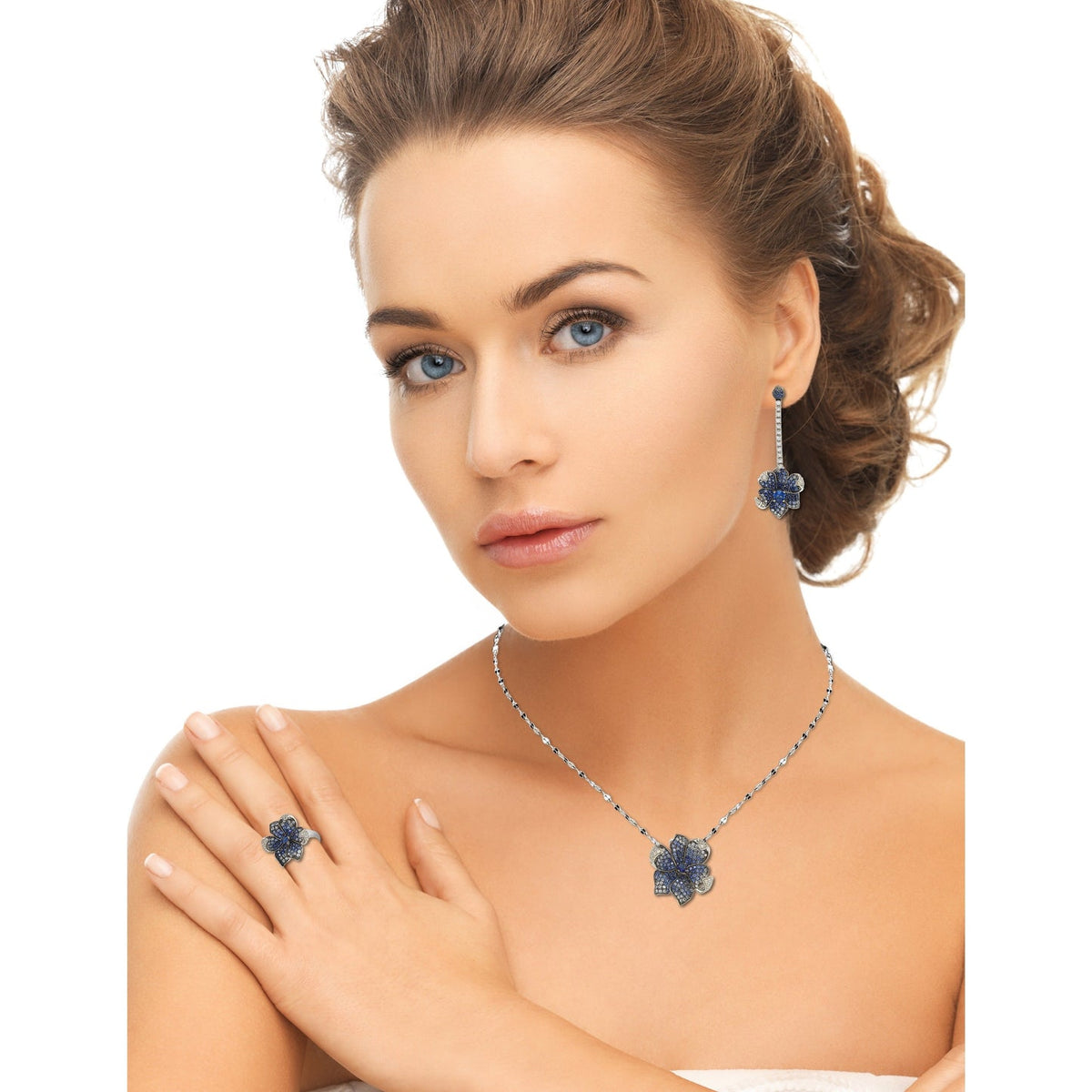
The flower-shaped design combines natural blue sapphires, created white sapphires and small natural brown diamond accents in sterling silver. It is a useful reminder that 925 describes the metal; the stone information is a separate part of the product specification.

Explore the Sapphire and Diamond Accent Flower Earrings in Sterling Silver
A rose-toned interpretation of sterling silver
This 36-inch 925 sterling-silver station necklace alternates seven clover motifs and eight circles with white cubic zirconia. Its rose-toned finish creates a warmer look than white silver. The color alone does not mean the underlying necklace is solid rose gold.

Explore the Rose Sterling Silver Cubic Zirconia Clover & Circle Station Necklace
White sterling silver for delicate everyday sparkle
Five small white-cubic-zirconia flower motifs are set along a polished 925 sterling-silver chain. The listing specifies a 16-inch chain with a 2-inch extension, demonstrating how to check metal content and fit independently instead of choosing only by a photograph.

Explore the Sterling Silver White Cubic Zirconia Flower Station Necklace
14K yellow gold with natural diamonds
Three round natural diamonds totaling 0.18 cttw form a heart on an 18-inch cable chain in 14K yellow gold. Here, 14K describes the precious-metal alloy and the diamond details describe the stones. The necklace brings both types of information together in one listing.

Explore the 14K Yellow Gold 0.18 cttw Diamond Heart Necklace
14K gold in a more contemporary silhouette
These 13 mm huggie-style hoops feature 14 round natural diamonds totaling 0.50 cttw in 14K yellow gold with a leverback closure. They show why metal purity and the finished design are separate considerations: the same 14K alloy designation can appear in a slender pendant or a statement-making hoop.

Explore the 14K Yellow Gold 0.50 cttw Diamond Huggie Hoop Earrings
How to care for sterling silver and 14K gold jewelry
To keep your favorite pieces looking beautiful, make jewelry your final touch after perfume and skincare, and remove it before water exposure, exercise, sleeping, or household tasks. Gently wipe the piece with a soft, dry, lint-free cloth after wearing it and store pieces separately to limit scratches and tangles.
Sterling silver can tarnish through environmental exposure, while a plated finish may wear with friction over time. Avoid abrasive polishes and harsh cleaners on pieces with coatings or delicate gemstone settings. Follow instructions for the whole piece, not the metal alone. Read the Suzy Levian Jewelry Care Guide for more material-specific recommendations.
Frequently asked questions about 925 and 14K stamps
Is 925 silver or gold?
925 identifies sterling silver, not solid gold. A piece with a 925 mark can still look yellow or rose gold if it has an appropriate surface finish.
Is 14K real gold?
Yes, when the mark describes the actual metal alloy: 14K is genuine gold mixed with other metals, containing roughly 58.3% pure gold. Read any additional wording that may identify a plated or layered product.
What does 585 mean on a ring?
585 indicates gold fineness of 585 parts per thousand (58.5%) and is commonly used as a designation for 14-karat gold.
Is 925 sterling silver waterproof?
Water exposure is not recommended as a routine habit for sterling-silver jewelry, particularly when it has a plated finish, gemstones, or delicate construction. Chlorine, saltwater and repeated moisture exposure can affect appearance and finishes.
Can a jewelry stamp tell me if a diamond is real?
No. A metal purity stamp says nothing definitive about whether the stones are diamond, sapphire or cubic zirconia. Check gemstone details separately. For help comparing diamond and CZ jewelry, see our Cubic Zirconia vs. Diamond Guide.
What if my jewelry has no visible stamp?
A missing visible mark does not settle authenticity either way. Very small pieces, worn engravings or different marking practices can make identification difficult. Check purchase records and the official product description, and consult a qualified professional if you need verification.
Choose the metal, then fall in love with the design
Learning to read 925 and 14K means you can shop with more confidence. The hallmark helps explain the metal, while the cut, silhouette, finish and craftsmanship create the piece you will actually enjoy wearing. Whether your style leans toward sparkling sterling silver or an enduring 14K gold design, choose jewelry that feels unmistakably yours.